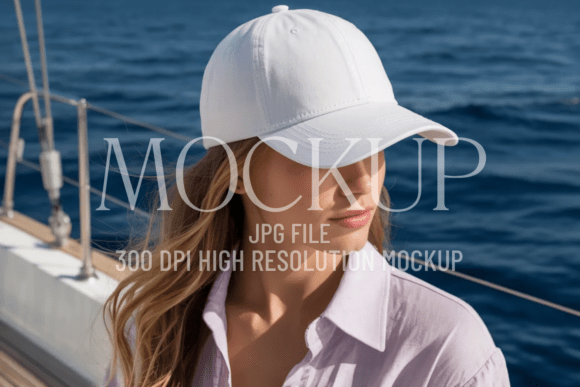
Embroidery Hat Mockup: A Designer's Review for Small Business
As a professional embroidery designer who has spent years refining digital files and testing them on real fabric, I know that the difference between a good product and a great one often comes down to the presentation. When I first encountered the Embroidery Hat Mockup, my immediate reaction was one of professional clarity. The description promises a "clean, fresh, and modern presentation," and in the world of small business merch, those words are music to our ears. This isn't just a decorative image; it is a strategic tool designed to showcase branding, quotes, posters, and social media graphics with precision.
In this review, I am looking at how this Graphics category item fits into the broader ecosystem of commercial embroidery. Whether you are running a boutique, a creative studio, or a local bakery, the way you present your embroidered patch or cap design can make or break customer trust. Let's dive deep into how this mockup serves as a bridge between your digital vision and the finished physical product.
The First Impression: Modern Professionalism Meets Handmade Warmth
The title Embroidery Hat Mockup sets a specific tone immediately. It suggests utility and focus. Unlike cluttered templates that distract from the artwork, this minimalistic approach allows the design itself to take center stage. For a small café or a florist shop, this clean aesthetic is vital. It signals that the brand values quality and attention to detail before the customer even touches the item.
When evaluating a mockup for use in custom apparel or product packaging accents, the visual personality matters. Does it feel rustic? Playful? Elegant? The "minimal" aspect of this asset leans heavily towards modern and premium. It strips away the noise, ensuring that when a potential buyer sees a tote bag design or a staff uniform logo, their eyes go straight to the stitch work. This is crucial for brand identity. In a crowded marketplace like Etsy, a crisp, high-quality presentation builds immediate credibility.
Real-World Application: From Patches to Staff Uniforms
Imagine a scenario where a local pet brand wants to launch a line of embroidered accessories. They need to create a cohesive look across caps, aprons, and tote bags. This is where the Embroidery Hat Mockup becomes an essential part of the workflow. It allows the designer to visualize how a specific machine embroidery design will sit on a curved surface versus a flat canvas.
- Branded Patches: If you are creating custom patches for jackets or bags, using this mockup helps clients visualize the final size and placement. It answers the question: "Will this logo look right on the chest?"
- Staff Uniforms: For businesses needing apron embroidery or work shirts, seeing the design on a realistic cap or garment model helps in planning the layout. It ensures consistency across all employee gear.
- Craft Business Assets: Sellers of handmade goods often struggle to show scale. A mockup provides a clear reference point, making the finished product tangible for online shoppers.
- Event Merch: For pop-up shops or trade shows, having a polished visual ready to print or display on social media can significantly boost engagement and pre-orders.
The versatility of this asset extends beyond just hats. It serves as a versatile placeholder for any digital embroidery file intended for wearables. Whether it is a quote on a baker's apron or a floral motif on a tote bag, the clean background ensures the focus remains on the thread density and color palette.
Strategic Considerations and Limitations
While the Embroidery Hat Mockup offers a sleek presentation, every experienced designer knows that what looks good on a screen requires careful technical execution in production. There are specific areas where caution is required to ensure the final result matches the mockup's promise.
Small Patch Sizes: Minimal designs often rely on fine lines and negative space. When scaling these down for tiny patches or sleeve details, the risk of thread loss increases. You must verify that the design holds up at small dimensions before committing to mass production.
Curved Surfaces and Cap Fronts: Hats are notoriously difficult to embroider due to their curvature. A design that looks perfect on a flat mockup might distort when stitched onto the front panel of a cap. It is essential to test the stitch density and outline thickness to prevent puckering or distortion.
Fabric Texture and Color: Dark uniforms require different thread choices than light fabrics. The mockup likely assumes a neutral or light background. If you are applying this design to dark cotton or textured linen, you may need to adjust the underlay and thread colors to maintain visibility. Additionally, items that require frequent washing, such as work shirts, demand robust stitching techniques to prevent fraying over time.
Building Trust Through Visual Consistency
For small business owners, the perception of value is directly linked to visual consistency. When a customer sees a handmade product presented with a professional mockup, they assume the actual craftsmanship is equally high. The Embroidery Hat Mockup supports this by providing a standardized, polished look that elevates the perceived worth of the merchandise.
This consistency aids in customer recognition. If every social media post, website banner, and email signature uses a similar, high-quality style to showcase your embroidered patch or tote bag design, you build a stronger brand memory. It tells the buyer that you care about the details, which translates to trust in the durability and quality of the physical item.
Practical Designer Notes for Production Success
Before you download this asset and start printing or ordering samples, there are several technical steps every embroidery professional should take. Treat this mockup as a planning phase, not the final step.
- Test in Black and White: Remove all color information from your embroidery file to check if the design maintains its shape and legibility without relying on color contrast.
- Check Small Scale: Resize the design to the smallest intended patch size. Ensure that text remains readable and outlines do not merge together.
- Review Thread Contrast: Analyze the thread colors against the background. High contrast is usually safer for small businesses to ensure maximum visibility.
- Inspect Spacing and Hoop Size: Confirm that the design fits within standard hoop sizes. Tight spacing can lead to thread breaks, while loose spacing can cause registration issues.
- Test on Real Fabric: Always run a test stitch on the actual material you plan to use. Fabric texture and stretch can alter the final appearance significantly compared to a digital preview.
- Use Proper Stabilizer: Depending on whether you are working with caps, aprons, or lightweight tees, the choice of stabilizer is critical for preventing distortion.
- Create a Client Approval Mockup: Use this tool to generate a visual proof for your clients. It saves time and reduces errors by confirming the look before the machine starts stitching.
- Verify Commercial Licensing: Before using this asset for commercial embroidery projects, double-check the license terms to ensure you are allowed to use it for business presentations and sales.
Ultimately, the Embroidery Hat Mockup is more than just a graphic; it is a communication tool. It bridges the gap between the abstract concept of a design and the tangible reality of a branded product. By using it thoughtfully and adhering to sound technical practices, small business owners and designers can create merchandise that not only looks professional but also stands the test of time and wear.
Whether you are designing for a creative studio, a boutique, or a craft business, integrating this level of preparation into your workflow will pay dividends in customer satisfaction and brand reputation. Remember, the goal is always to deliver a finished product that exceeds expectations, and a well-planned mockup is the first step toward that excellence.